
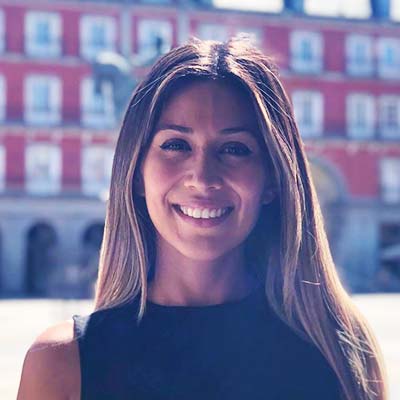
Program Manager, Climate Adaptation Finance for Women's Empowerment & W+ Standard Coordinator
Program Manager, Climate Adaptation Finance for Women's Empowerment & W+ Standard Coordinator
Program Manager & W+ Standard Coordinator

Larissa Dominguez is a gender specialist with extensive experience in governance of natural resources, rural development and public policy. She has provided technical support and capacity development for stakeholders ranging from government officials to grassroots organizations and women’s groups. She is currently the focal point for the implementation of Pillar 3 – gender equality in family farming – of the United Nations Decade of Family Farming in FAO. Larissa was trained in the W+ Standard process on site in Kenya in 2022. She holds a BS in International Relations from the Instituto Tecnológico Autónomo de México in Mexico and a MSc with Honours in Social Development with a focus on Gender and Climate Change from the University of New South Wales in Australia. Larissa lives in Rome, Italy and Mexico City.
Contact: larissa.dominguezfuentes@wocan.org
W+ Lead Trainer
W+ Lead Trainer
WOCAN Lead Trainer

As an anthropologist with training in ecological anthropology, Barun Gurung has worked extensively with ethnic communities in the Himalayan region of Northeast India, Bhutan, Nepal and the Yunnan province of China, studying their indigenous knowledge of subsistence crops and medicinal herbs. This resulted in the establishment of a network of local researchers and development professionals in the eastern Himalayan region working on biodiversity, ethnicity ad gender issues. As the coordinator of the Consultative Group on International Agriculture’s (CGIAR) system wide program on Participatory Research and Gender Analysis, Dr. Gurung’s research attention and focus has been on trying to better understand how learning and change can be affected for mainstreaming gender-sensitive participatory approaches within research institutions that work on agriculture and natural resource management. As part of the CGIAR initiative, he led a team of researchers and trainers to provide capacity development for organizational research and implementation of change strategies in selected CGIAR centers, eight National Agricultural Research Centers of East and Central Africa, and five agriculture and natural resource management organizations in the Eastern Himalayan Region and Laos. He works as one of the Core Associates for WOCAN and has recently led gender training workshops for the Rural Women’s Leadership project in Nepal and the Philippines. Dr. Gurung holds a PhD in Anthropology from the University of Hawaii and speaks English, Urdu, Hindi, Nepali, Tibetan and Dzhongkha.
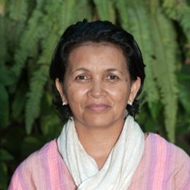

Danièle is a researcher, agronomist and has 25 years experiences in research and development and action research in Madagascar. Since 2004, she has been involved in the process of gender mainstreaming in her institution , the National Research Center Applied for Rural Development where she is the gender focal point. She participated as main investigator or researcher in different projects related to rural women’s leadership and women access to natural resources, funded by national and international institutions such as IDRC, IFAD. A member of WOCAN since 2010, she facilitated or co facilitated different training workshops on rural women’s leadership and gender analysis.
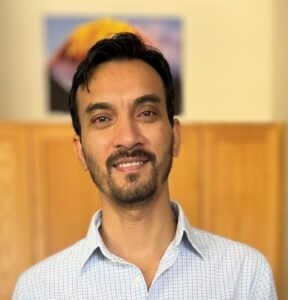
Statistician
Statistician
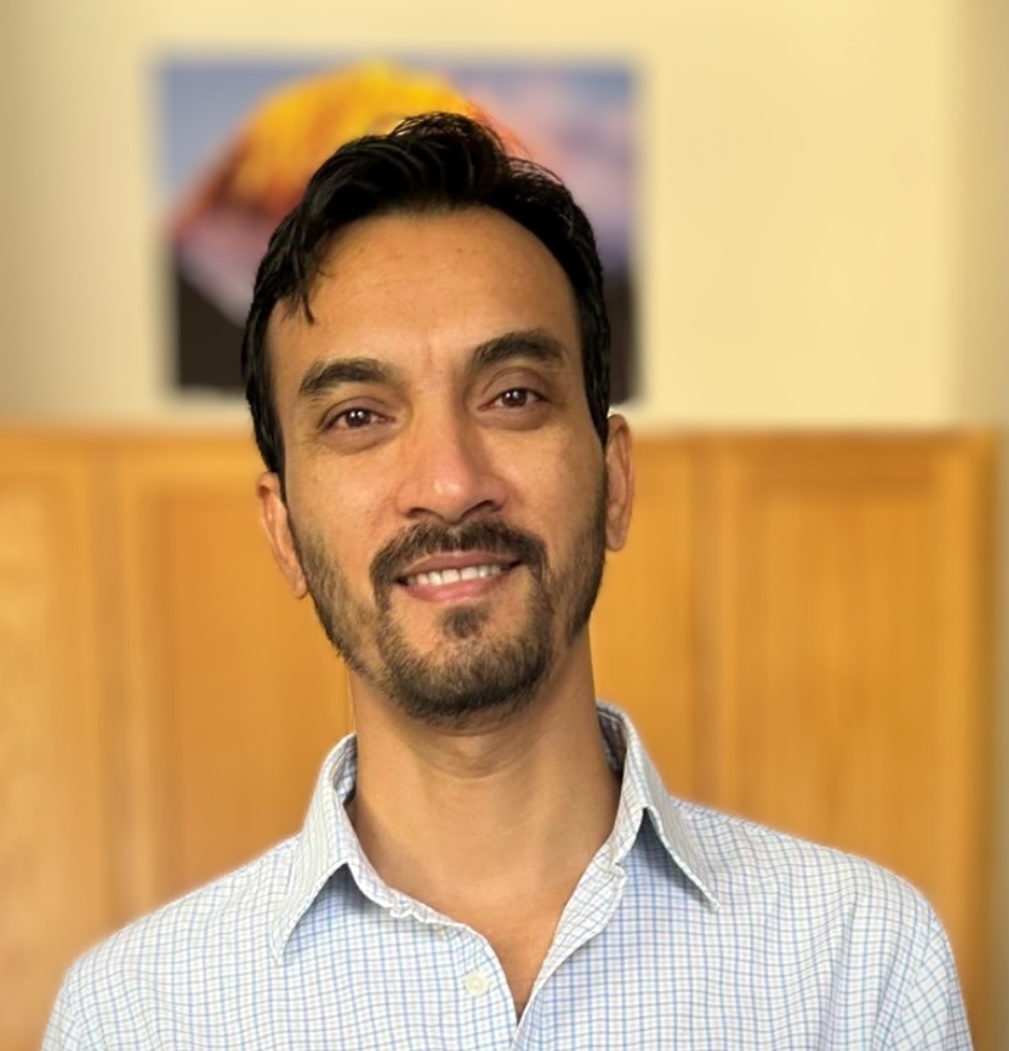
Indu has over 15 years of extensive experience in data science. He has worked with various international organizations such as Save the Children, Mercy Corps Nepal, IFPRI, HKI, ITAD UK, TANGO USA, and others. He has advanced proficiency in R programming, where he excel in tasks such as data cleaning, visualization, and machine learning. Further expertise extends to SQL, R, STATA, JMP, and the adept utilization of Tidyverse R libraries. Indu has demonstrated excellence in managing extensive datasets and applying sophisticated predictive modeling techniques. Indu has supported the data analysis of various W+ projects globally.

Dibya has a MSc in biological sciences from Tribhuwan University in Nepal. She has more than twenty years of experience in gender, rural development and natural resources management, ranging from grassroots to policy planning levels. She has worked for and trained several national and international organizations and closely worked with the government of Nepal.


Mamta is a trained economist with over 27 years of experience spanning women’s empowerment, gender justice, and climate action. She has been deeply engaged in advancing environmental intersectionality for climate justice and has played a key role in integrating the voices of women from the Global South into climate change decision-making processes. As part of this journey, she has also led initiatives with SHE Changes Climate, contributing to global advocacy for gender parity and women’s leadership in climate policy.
Her achievements include integrating over 800 school dropout children back into the education system; rescuing more than 12,000 children from human trafficking, child sexual abuse, and exploitation; and strengthening the capacities of over 20,000 government stakeholders to deliver services more effectively and compassionately. She has also supported more than 5,000 women from climate-vulnerable areas in India to establish small-scale enterprises, and provided professional training to over 300 women farmer collectives.
Mamta’s expertise and contributions have been widely recognized. She was honored by Women Entrepreneur Magazine as one of India’s Top 10 Women Leaders of 2023. She is an alumna of the prestigious International Visiting Leaders Program of the U.S. Government, and currently serves on the Advisory Council of Daughters of the Earth as well as an Ambassador of the Women Climate Collective Cohort of Fondation L’Oréal.


Chantheang Tong graduated with a Bachelor’s degree in Forestry Sciences from the Royal University of Agriculture in Cambodia in 1999 and has over 20 years of experience in training, research, and project management focused on sustainable agriculture and community development. For 20 years, she worked at the Cambodian Center for Study and Development in Agriculture (CEDAC), where she had designed and conducted various training courses and research projects, covering topics such as agricultural production with particular focus on organic and good agriculture practices, market analysis, value chains, community organization, financial literacy, food security, gender issues, and climate change. Her work is particularly focused on empowerment of smallholder farmers through providing capacity building and market linkage.
She has also completed numerous research assignments, including feasibility studies and socioeconomic surveys, for organizations like FAO, GIZ, WOCAN, World Renew, and CARE among others. From 2016 to 2021, Chantheang served as a national consultant for the ADB-funded ‘Biodiversity Conservation Corridor’ project which promoted climate resilient agriculture.


Marianne Gilchrist is an Aotearoa, New Zealand-qualified lawyer who consults to a range of national and international clients on legal, policy, and people and culture matters. She has worked with organizations such as Arizona State University (ASU) Julie Ann Wrigley Global Futures Laboratory, Deloitte, The World Bank, the Inter-Parliamentary Union, and the East-West Center.
Passionate about integrating her legal expertise with opportunities to empower women, Marianne has demonstrated thought leadership on gender issues throughout her career. She served as an organiser and researcher for the Women20 for the G20 Inaugural Asia-Pacific Dialogue on women’s economic empowerment and conducted research on women’s rights in ASEAN. She previously led the WE Empower UN SDG Challenge — a global competition recognising and supporting women entrepreneurs advancing the UN Sustainable Development Goals (SDGs) through sustainable business — and SDG Training for Parliamentarians, producing resources to educate decision-makers on SDGs 5 and 13, working closely with and supporting a former UN Ambassador.
As a university student, Marianne was an integral member of the Student Volunteer Army, an internationally recognized movement that mobilized students following the Christchurch earthquakes of 2010–2011.